
Futures
Access hundreds of perpetual contracts
TradFi
Gold
One platform for global traditional assets
Options
Hot
Trade European-style vanilla options
Unified Account
Maximize your capital efficiency
Demo Trading
Introduction to Futures Trading
Learn the basics of futures trading
Futures Events
Join events to earn rewards
Demo Trading
Use virtual funds to practice risk-free trading
Launch
CandyDrop
Collect candies to earn airdrops
Launchpool
Quick staking, earn potential new tokens
HODLer Airdrop
Hold GT and get massive airdrops for free
Launchpad
Be early to the next big token project
Alpha Points
Trade on-chain assets and earn airdrops
Futures Points
Earn futures points and claim airdrop rewards


More



From Wisconsin to $69.5M: How Beeple Became the Art World's Digital Rebel
Mike Winkelmann didn’t set out to break the internet. But the guy who’s been obsessively creating one piece of art every single day since 2007—we’re talking 6,000+ consecutive days—ended up doing exactly that when his NFT sold for $69.5 million at Christie’s in 2021.
He calls himself Beeple (yeah, named after a 1980s toy he liked), and honestly? His story reads less like a traditional artist biography and more like what happens when you combine “relentless discipline” with “zero off days.”
The Madness Behind ‘Everydays’
Here’s where it gets interesting. Beeple’s whole empire stems from one deceptively simple rule: create something new every. Single. Day. No exceptions.
When asked why, his answer cuts through the motivational BS: “You won’t have inspiration every day; on most days, I don’t.” He’s literally at home thinking “do I really want to spend two more hours on the computer?” And the answer is usually no. But momentum is a thing, and after 17 years, that momentum is nuclear.
Each year he locks in on specific software mastery—Cinema 4D, Octane rendering, whatever—treating it less like an art project and more like a skill grindset. The result? 6,048 pieces of increasingly refined digital art.
His Aesthetic: Dystopia With a Twisted Sense of Humor
Beeple’s work is deliberately weird. He creates pieces so surreal, so blurred between satire and prophecy, that sometimes even he doesn’t remember what he was thinking when he made them. Dystopian futures meet pop culture commentary. Think: political commentary wrapped in neon-soaked weirdness.
The guy’s literally making art that makes you uncomfortable, and somehow that’s the vibe that resonates with millions.
From Underground to Luxury Collaborations
Before the NFT explosion, traditional brands were already knocking. Louis Vuitton grabbed 13 pieces from his ‘Everydays’ series for their 2019 Spring/Summer collection—shown at the Louvre with Beeple front row at Paris Fashion Week. Apple, Nike, NBC, TIME magazine? All lined up for collaborations.
That TIME magazine NFT cover? $230,000. Not exactly pocket change for digital art back then.
The NFT Numbers That Changed Everything
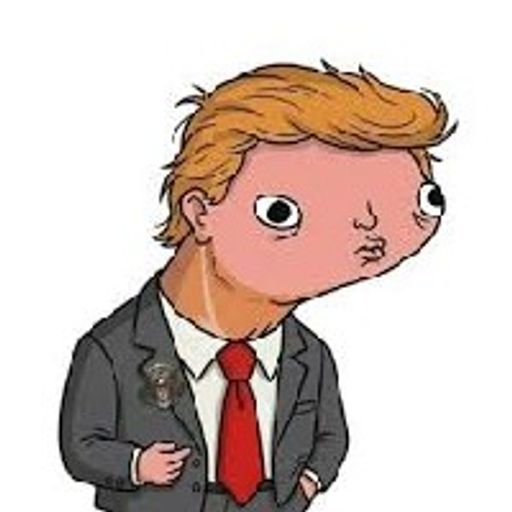
2020: Beeple’s first NFT experiments. ‘CROSSROAD’ sold for $66K and dynamically changed based on the 2020 US election result (Biden won, so yeah, it showed a face-down Trump). Spicy.
2021 (Early): ‘EVERYDAYS: THE 2020 COLLECTION’—20 hand-picked pieces—moved for $3.5 million over one weekend. Christie’s noticed. A lot.
2021 (March): The moment that shook the traditional art world. ‘EVERYDAYS: THE FIRST 5000 DAYS’—all 5,000 days of his daily output, chronologically curated into one mega-piece—hammered for $69.5 million at Christie’s. This was their first NFT auction ever. This was them accepting Ethereum as payment. This was the moment “digital art” stopped being a joke at dinner parties.
The Ripple Effect
In just three years, Beeple went from unknown digital artist grinding daily to literally redefining what the art establishment considers “art.” His work now lives in museums—Crystal Bridges Museum of American Art, galleries worldwide. His generative sculpture HUMAN ONE has become a fixture in the high-art conversation.
Most artists dream of one breakthrough moment. Beeple engineered it through 6,000+ of them.
The real flex? It wasn’t luck. It was discipline so extreme that even boring days became part of the art. That’s the future of creativity—not inspiration, but momentum.