
Futures
Access hundreds of perpetual contracts
TradFi
Gold
One platform for global traditional assets
Options
Hot
Trade European-style vanilla options
Unified Account
Maximize your capital efficiency
Demo Trading
Introduction to Futures Trading
Learn the basics of futures trading
Futures Events
Join events to earn rewards
Demo Trading
Use virtual funds to practice risk-free trading
Launch
CandyDrop
Collect candies to earn airdrops
Launchpool
Quick staking, earn potential new tokens
HODLer Airdrop
Hold GT and get massive airdrops for free
Launchpad
Be early to the next big token project
Alpha Points
Trade on-chain assets and earn airdrops
Futures Points
Earn futures points and claim airdrop rewards


More






Understanding Bitcoin Sentiment: Fear and Greed Index Explained
Understanding the Bitcoin Fear and Greed Index
The Fear and Greed Index is a numerical indicator reflecting the emotional state of cryptocurrency market participants. It ranges from 0 to 100, where 0 indicates extreme fear, suggesting panic selling and potential undervaluation of assets, while 100 represents extreme greed, signaling market overbuying and possible correction.
This index was adapted for cryptocurrencies from the traditional stock market, where CNNMoney first introduced it. In the crypto sphere, it focuses primarily on Bitcoin (BTC), as its movements often set the tone for the entire market.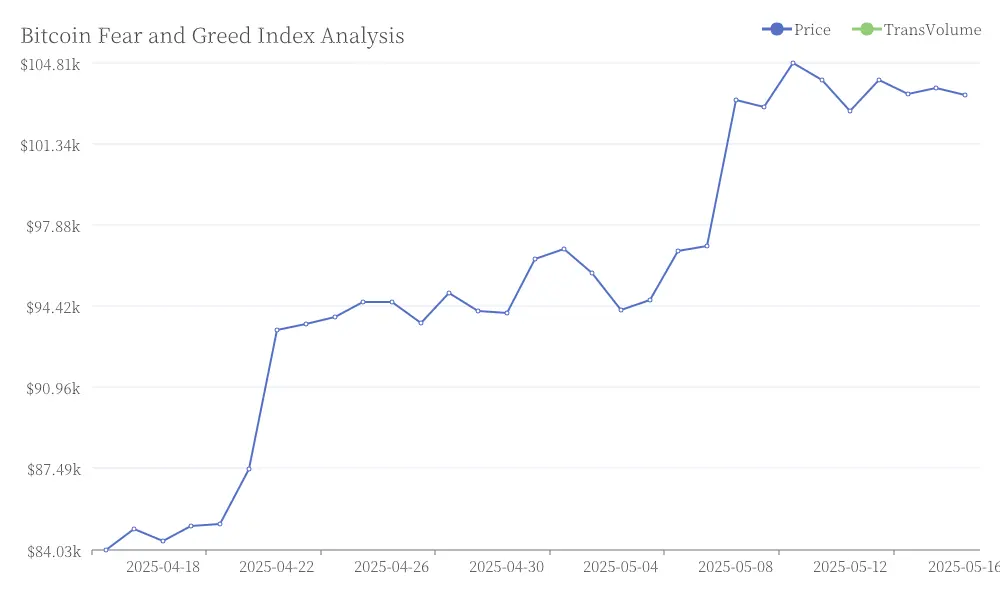 Bitcoin Fear and Greed Index Analysis
The Significance of “Fear” and “Greed” in the Market
When the market is gripped by fear, investors worry about further price declines. This leads to mass selling, reduced demand, and consequently, undervaluation of assets. Fear can be a sign of overselling, often perceived as a buying opportunity.
Greed emerges when the market is rising, and traders, succumbing to FOMO (fear of missing out), actively buy. This can lead to asset overvaluation and signal an impending correction.
These emotions influence trader behavior, making the index an important indicator of market psychology.
How the Cryptocurrency Fear and Greed Index Works
The Fear and Greed Index is calculated based on several key metrics, each carrying a specific weight in the final value. The main parameters include volatility (25%), which measures current Bitcoin volatility against average values; trading volume (25%), analyzing current volumes compared to averages; social media activity (15%), which evaluates Bitcoin mentions online; market surveys (15%) assessing trader sentiments; Bitcoin dominance (10%), where increases in BTC’s market share indicate fear; and Google Trends data (10%), which analyzes Bitcoin-related search queries.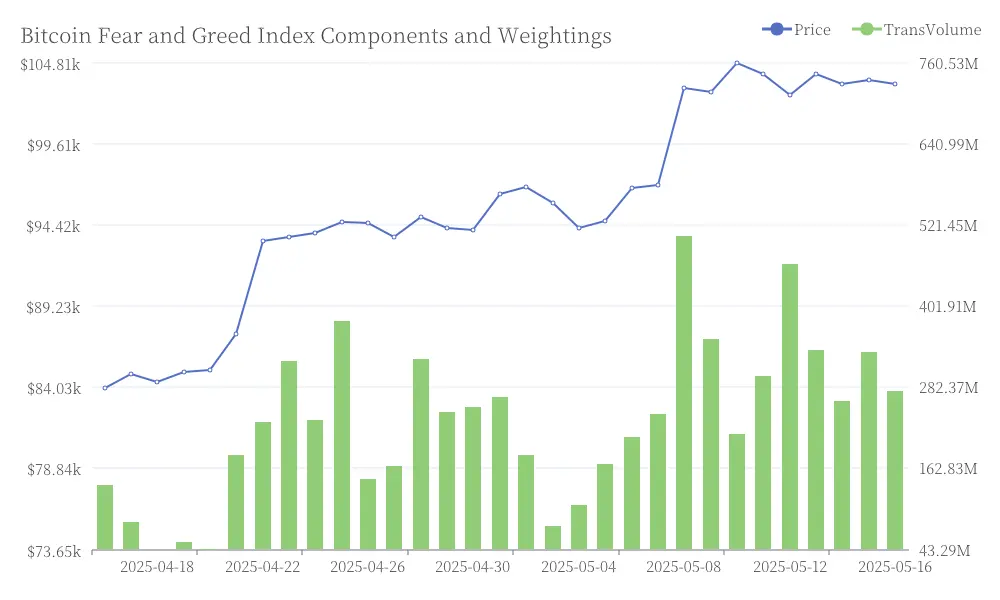 Bitcoin Fear and Greed Index Components and Weightings
Where to Check the Fear and Greed Index Online
Several reliable sources are available for tracking the Fear and Greed Index. Alternative.me offers popular daily index updates for Bitcoin, while CoinMarketCap provides its own index with API access for developers. CoinStats delivers updates every 12 hours and includes charts for Bitcoin and other cryptocurrencies.
Current Values of the Bitcoin and Cryptocurrency Greed Index
As of May 16, 2025, the Fear and Greed Index for Bitcoin, according to Alternative.me, is in the greed zone (approximately 70-75 out of 100). This indicates optimism in the market, driven by rising BTC prices and increased trading volumes.
For altcoins, the index is less standardized, as most calculations are oriented towards Bitcoin. However, altcoin sentiments often follow BTC due to high correlation.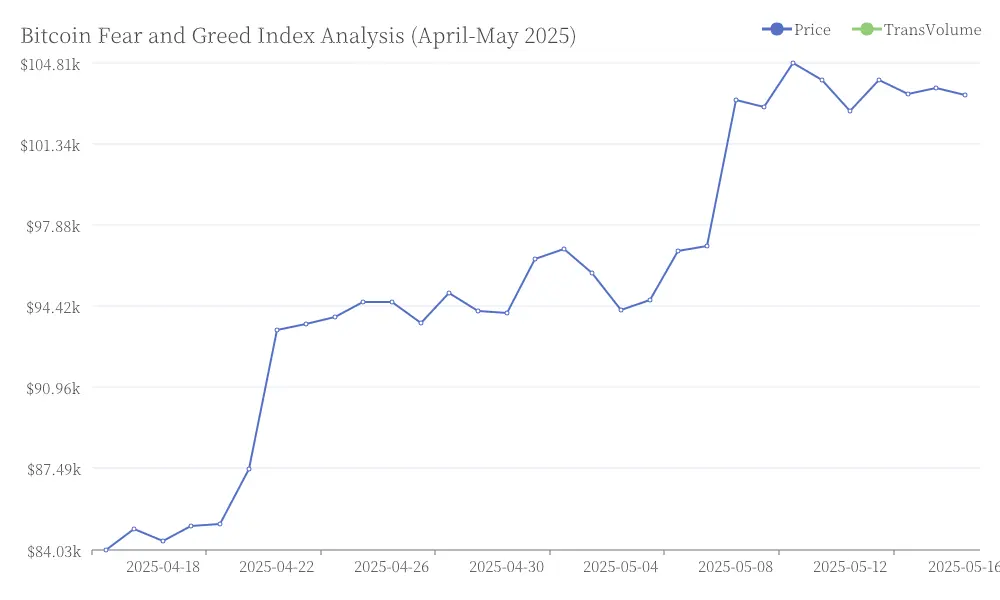 Bitcoin Fear and Greed Index Analysis (April-May 2025)
How to Use the Fear and Greed Index in Trading
Traders can effectively apply the Fear and Greed Index in various trading strategies. When the index shows extreme fear (0-24) or fear (25-49), consider buying opportunities by entering long positions with limit orders at support levels and setting appropriate stop-losses. Conversely, during periods of greed (51-74) or extreme greed (75-100), consider selling or entering short positions with calculated leverage and protective stop-losses.
A contrarian approach, following Warren Buffett’s wisdom, involves buying when others are fearful and selling when they’re greedy. The index helps identify these extreme market sentiments, though signals should be confirmed with technical analysis. For best results, combine the index with other tools like RSI, MACD, and volume indicators, while also staying informed about relevant news and regulatory developments.
Practical Tips for Traders
The Fear and Greed Index should never be your sole decision-making tool but rather part of a comprehensive analysis strategy. Test your approaches on demo accounts before risking real capital, and study how the index has historically correlated with Bitcoin price movements. Always practice sound risk management by setting appropriate stop-losses and avoiding excessive leverage, regardless of what the index indicates.