
Futures
Access hundreds of perpetual contracts
TradFi
Gold
One platform for global traditional assets
Options
Hot
Trade European-style vanilla options
Unified Account
Maximize your capital efficiency
Demo Trading
Introduction to Futures Trading
Learn the basics of futures trading
Futures Events
Join events to earn rewards
Demo Trading
Use virtual funds to practice risk-free trading
Launch
CandyDrop
Collect candies to earn airdrops
Launchpool
Quick staking, earn potential new tokens
HODLer Airdrop
Hold GT and get massive airdrops for free
Launchpad
Be early to the next big token project
Alpha Points
Trade on-chain assets and earn airdrops
Futures Points
Earn futures points and claim airdrop rewards


More


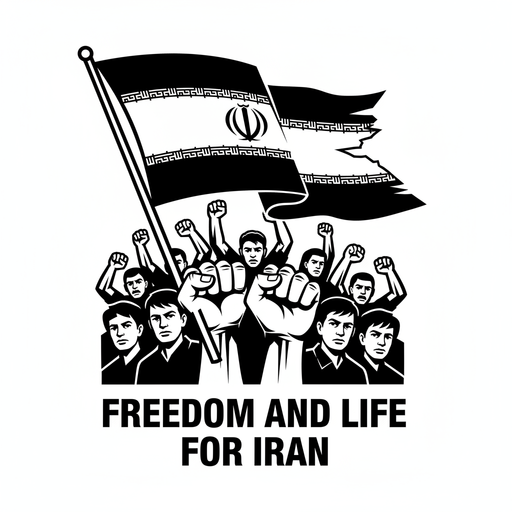



Trump's "Art of the Deal," why did it fail on Iran?
Trump’s signature dealmaking strategy—securing negotiation leverage through maximum pressure—is now running into systematic failure on the Iran issue. More than five weeks into the war, military action has not been able to force Tehran to back down, and diplomatic breakthroughs are similarly far off; to a significant extent, this war has slipped out of the White House’s control.
According to Xinhua News Agency, local time on Wednesday, Trump delivered his first nationwide televised address since the U.S. launched attacks on Iran on February 28. However, the 19-minute speech was packed with contradictory statements, shattering market expectations that the situation would cool off, and international oil prices then surged sharply.
The root of this situation is that Trump’s negotiation credibility has completely collapsed in Tehran. The Iranian side views what Washington calls “constructive negotiations” as a smokescreen to manipulate the market or buy time to regroup for an offensive. Behind that, meanwhile, lies a deep crisis of mutual trust between the two sides that is nearly impossible to bridge.
Also according to Xinhua News Agency, Trump has set April 6 as the final deadline to reach an agreement with Iran. At that time, the military strike campaign Trump promised to “destroy” Iran’s energy facilities could be resumed. Meanwhile, Trump’s approval ratings continue to slide, the Republican Party faces pressure ahead of the midterm elections in November, and domestic political space is shrinking.
“A dealmaking strategy” hits a trust crisis
In his 1987 bestselling memoir The Art of the Deal, Trump wrote that, “Leverage is the greatest power you can have in a negotiation.” However, this “press forward step by step” negotiation philosophy is now being mocked openly in the face of Iran.
Iranian senior official Saeed Jalili mocked the frequent shifts in Trump’s position, calling them “signals that America is gradually retreating and that its president’s fantasies have been shattered.”
Vali Nasr, an expert on Iran at Johns Hopkins University, noted that Iran’s basic judgment today is that it must inflict “enough pain and cost” on the United States to push it to take negotiations seriously with “truly meaningful conditions” for Iran. He said that, in Tehran’s view, Trump simply lacks credibility as a negotiator.
This distrust is not without basis. Nasr and other experts said that Trump had launched attacks during two rounds of early talks, destroying any trust Iran had in him. “When he promised he wanted to negotiate with Iran, they didn’t believe it at all,” Nasr said. “They don’t think what he says has any meaning.”
The assessment from Julian Zelizer, a professor of political history at Princeton University, was even more direct. He said: “The Art of the Deal doesn’t work at all in this situation, because it’s not just about two parties sitting down to maximize their interests. What he expected is very far from what actually happened.”
Contradictory signals, market disappointment
In his Wednesday speech, Trump placed two positions that are sharply at odds side by side. On the one hand, he claimed that Iran’s regime has been “badly wounded on the military, economic, and all other fronts”; on the other hand, he vowed that in the coming weeks he would “deliver very hard-hitting blows” to Iran, and warned that if Tehran does not reach an agreement, he would destroy its power facilities.
On the Strait of Hormuz, Trump’s statements were also inconsistent. On the one hand, he said the strait would be “naturally” reopened; on the other hand, he hinted that if it were not achieved by then, that would be a “problem for another country,” not the United States’ responsibility.
“Three macro options are on the table: escalation, retreat, or an agreement,” Richard Fontaine, chairman of the think tank New America Security Center in Washington, said. “The president clearly wants to reach an agreement, but the issue is that Iran denies this—and may fundamentally not agree to reopen the Strait of Hormuz.”
He added:
The Hormuz dilemma: runaway war aims
Trump’s move to blockade the Strait of Hormuz against Iran caught him by surprise. The action triggered severe turmoil in global energy markets, pushed up gasoline prices in the United States, and also gave Trump an unexpected new war aim out of nowhere—reopening this critical shipping chokepoint.
Since then, Trump’s response has been to keep ratcheting up pressure, threatening to destroy Iran’s power and oil infrastructure if Iran does not open the strait. But in this Wednesday speech, he changed his tune again, saying that “we don’t need it,” indicating that those countries that are “urgently dependent” on the strait can handle it themselves.
Richard Fontaine was blunt in response:
Hard to find an exit, political pressure mounting
At home, the political costs of this war are accumulating quickly. Trump’s approval rating continues to fall, and the Republican Party is already in a passive position ahead of the midterm elections in November, while the Democratic Party is building momentum and preparing to attack over the war’s economic impact.
Jim Himes, the top Democratic member on the House Intelligence Committee, said: “I think Trump is starting to realize that we’re not winning this war.” He added:
“So I think he’s now desperately trying to find a way out, and the problem is that there isn’t an obvious way out,” Himes said.
According to Xinhua News Agency, White House press secretary Levit confirmed at a press briefing that Trump has set April 6 as the final deadline to reach an agreement with Iran. At that time, the military strike campaign Trump promised to “destroy” Iran’s energy facilities could be resumed. Tehran’s response is: expecting Washington to make concessions, and denying that any negotiations are taking place.
Risk warning and disclaimer