


Futures
Access hundreds of perpetual contracts
TradFi
Gold
One platform for global traditional assets
Options
Hot
Trade European-style vanilla options
Unified Account
Maximize your capital efficiency
Demo Trading
Introduction to Futures Trading
Learn the basics of futures trading
Futures Events
Join events to earn rewards
Demo Trading
Use virtual funds to practice risk-free trading
Launch
CandyDrop
Collect candies to earn airdrops
Launchpool
Quick staking, earn potential new tokens
HODLer Airdrop
Hold GT and get massive airdrops for free
Launchpad
Be early to the next big token project
Alpha Points
Trade on-chain assets and earn airdrops
Futures Points
Earn futures points and claim airdrop rewards


More





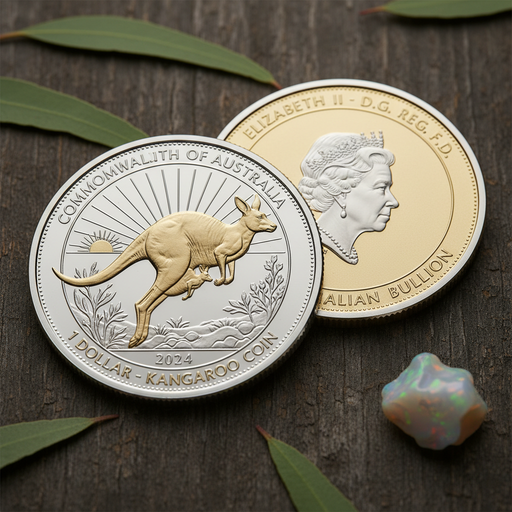
The outlook for gold in the coming years: heading towards $5,000 by 2030
Gold forecasts for the coming years paint a decidedly bullish scenario. With analyses that span price charts, macroeconomic factors, and market positioning, a coherent picture emerges: gold will continue its appreciation path, with ambitious yet reasonable targets for the decade stretching through 2030. As of today, March 2026, we can already verify how the forecasts made in 2024 have found confirmation in the markets.
Gold forecasts summary: key targets through 2030
Current estimates point to a trajectory of moderate but consistent growth:
These forecasts reflect the spot price of gold and incorporate the analysis of multiple underlying factors. The thesis remains valid as long as the metal does not fall and stay below the critical threshold of $ 1,770—an outcome that, however, is considered unlikely given the current macroeconomic backdrop.
How to forecast the gold price: the methodology underpinning the long-term outlook
The quality of gold forecasts depends on the strength of the methodology. Not all estimates carry the same weight: many are generated hastily on social media, without analytical foundations. Credible forecasts are based on rigorous frameworks developed over time.
The approach taken integrates three core pillars:
This three-dimensional approach makes it possible to build coherent and testable forecasts over the medium to long term, rather than relying on superficial extrapolations.
Factors supporting gold’s bullish outlook over the next 10 years
Secular-scale chart reversals
By analyzing gold’s 50-year chart, two bullish formations of extraordinary scope stand out:
There is a well-established charting principle: long-duration consolidations generate reaction moves that are just as strong. This rule provides a solid basis for expecting a prolonged bullish gold market in the years ahead, with a high degree of confidence. The decade forecasts are therefore anchored to these geometric models of secular scale.
Global monetary dynamics
The M2 monetary base continues to expand, though at less forceful rates than in 2021. At the same time, consumer inflation (CPI) shows steady progression. History highlights a close correlation between increases in the monetary base and gold’s appreciation: a divergence between the two phenomena proves to be temporary and unsustainable over the long run.
The chart of these indicators over the past few years confirms the alignment: with both M2 and CPI trending upward, the underlying conditions for gold appreciation remain in place. Although the bull market in gold forecasts for the next few years is described as “weak” or moderate, its continuity appears supported by these structural factors.
The fundamental driver: inflation expectations
Among the many factors influencing gold, inflation expectations stand out as the most important. Contrary to common opinions, gold’s fundamentals do not rest primarily on supply-demand dynamics or economic cycles, but on the market’s perception of future inflation.
The TIP ETF (Treasury Inflation-Protected Securities), which reflects breakeven inflation expectations, shows an extraordinarily high historical correlation with the gold price. This correlation has remained solid over time, interrupted only by very brief exceptions. The TIP ETF follows a long-term secular upward channel that supports both gold and silver, providing reassurance for decade-long appreciation forecasts.
At the same time, it’s interesting to note that gold, TIP, and equities (S&P 500) maintain positive mutual correlations. When expected inflation rises, all three assets tend to appreciate, debunking the myth that gold mainly thrives during economic recessions.
Leading market indicators behind bullish forecasts
The outlook for gold also finds support in specific market indicators:
Currency and bond markets
The euro shows a bullish setup on its long-term secular chart. Since gold is inversely correlated with the U.S. dollar (and therefore positively correlated with the euro), a strong euro creates a favorable environment for gold appreciation. U.S. Treasury securities, after the yield peak in mid-2023, have entered a sideways-to-bullish trend that supports higher gold prices.
Futures positioning
On the COMEX market, traders’ net short positions remain high—an indicator that traditionally “caps downside pressure” on prices. While this may limit or slow an acceleration to the upside, it still allows for a moderate but lasting appreciation, in line with the moderate forecasts made by analysts.
Gold in the global currency context: confirmations from other currencies
A distinctive phenomenon of the cycle that began in 2024 has been the simultaneous formation of new all-time highs for gold in every world currency—from the pound to the euro, from the yen to the Swiss franc—not only in U.S. dollars. This phenomenon, which occurred ahead of the USD breakout and is effectively reflected in publicly available charts, marked the most definitive market confirmation of a bullish gold outlook for the decade in question.
Forecasts from global financial institutions
Throughout 2024 and the start of 2025, many financial institutions published their estimates:
The convergence of the financial community around the $ 2,700–2,800 range for 2025 is notable, signaling substantive consensus. However, InvestingHaven maintained a more bullish outlook, projecting $ 3,100 for 2025—a divergence that reflects greater confidence in fundamental drivers and long-term chart indicators.
Towards the decade: silver and other precious metals
Over the next ten years, the silver market should follow gold’s path, but with a differentiated dynamic. Historically, silver has accelerated its bullish trend in the later phases of the gold cycle, as shown by the gold/silver ratio chart over 50 years. Careful investors will need to watch for the point when silver shows an acceleration, potentially pushing toward $ 50 per ounce price targets.
Historical accuracy of forecasts: model validation
InvestingHaven’s track record deserves particular attention. For many consecutive years, annual gold price forecasts have proven exceptionally accurate, as documented by comparisons between estimates and actual highs/lows. This consistency is not due to luck; it results from the rigorous application of established methodologies. The 2024 forecast of $ 2,200–2,555 was reached by August 2024, further validating the analytical approach. While exceptions do exist—such as the 2021 forecast of $ 2,200–2,400 that did not materialize—the success rate remains very high.
This predictive capability, rooted in rigorous multifactor analysis, strengthens confidence in the forecasts made for the decade up to 2030.
Scenarios across the decade: frequently asked questions about the long-term outlook
What price to reach by 2030?
The projected peak for 2030 falls in the $ 4,500–5,000 range, with $ 5,000 as a psychologically and technically significant target. It would represent a considerable but proportionate appreciation relative to the underlying macroeconomic factors.
What would happen in extreme scenarios?
Even though $ 10,000 gold remains theoretically possible, it would require extreme market conditions: runaway inflation similar to the 1970s, or acute geopolitical fear episodes. In the current context, with central banks actively monitoring, such scenarios remain unlikely.
Forecasts beyond 2030?
It’s not reasonable to project gold prices beyond the considered decade. Every ten years, the macroeconomic landscape changes significantly: interest rates, inflation regimes, and global monetary structures evolve substantially. Extrapolating beyond 2030 would be a speculative exercise lacking solid analytical fundamentals.
Conclusion: gold forecasts for the decade represent a long-term opportunity
The convergence of secular technical analysis, robust macroeconomic dynamics, favorable leading indicators, and the consensus (albeit with some variance) of the global financial community creates a coherent scenario for gold forecasts in the coming years. The path from here to 2030 won’t be linear: corrections and volatility periods will be natural phases, not disproof of the underlying thesis.
For investors with an extended time horizon, the gold forecasts for the decade offer not only a perspective of nominal appreciation, but also a form of protection against monetary erosion amid growing global liquidity creation. The $ 5,000 target by 2030 incorporates these long-term structural factors, remaining consistent with the fundamental principles that govern the price of the oldest metal in humanity’s treasury.