


Futures
Access hundreds of perpetual contracts
TradFi
Gold
One platform for global traditional assets
Options
Hot
Trade European-style vanilla options
Unified Account
Maximize your capital efficiency
Demo Trading
Introduction to Futures Trading
Learn the basics of futures trading
Futures Events
Join events to earn rewards
Demo Trading
Use virtual funds to practice risk-free trading
Launch
CandyDrop
Collect candies to earn airdrops
Launchpool
Quick staking, earn potential new tokens
HODLer Airdrop
Hold GT and get massive airdrops for free
Launchpad
Be early to the next big token project
Alpha Points
Trade on-chain assets and earn airdrops
Futures Points
Earn futures points and claim airdrop rewards


More

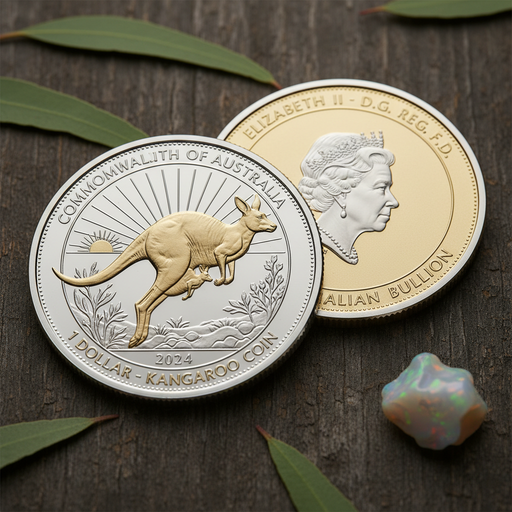


Understanding Unit of Account: From Traditional Money to Bitcoin's Promise
The unit of account is one of money’s three fundamental functions in modern economics, yet it remains one of the most misunderstood concepts. While most people are familiar with money’s role as a medium of exchange or a store of value, few truly grasp how critical the unit of account is to the functioning of entire economies. At its core, a unit of account serves as the standard measure through which we value everything—from your morning coffee to your house, and from government budgets to international trade flows.
What Makes a Unit of Account Work?
A unit of account is essentially a shared language for expressing value. Without it, comparing two different items would be impossible. Imagine trying to determine whether it’s better to trade a car for a house without any common measure—you’d have no way to calculate the difference in worth. When countries establish a common unit of account—like the euro (EUR), British pound (GBP), or Chinese yuan—they create a framework that allows citizens to make rational economic decisions.
For something to function effectively as a unit of account, it must possess two critical properties. Divisibility allows the unit to be broken into smaller components, enabling precise pricing of goods and services across all price ranges. A currency that cannot be divided would be useless in modern commerce. Fungibility means that one unit is perfectly interchangeable with another of the same denomination. Just as one dollar bill has identical value to any other dollar bill, a good unit of account must maintain consistent value across all instances.
These properties seem simple, yet they form the backbone of how economies operate. Without divisibility and fungibility, modern commerce as we know it would collapse.
The Unit of Account in Today’s Global Economy
Currently, the U.S. dollar (USD) has emerged as the dominant unit of account for international transactions, making it the common reference point for global trade and finance. When international companies negotiate contracts, compare assets, or track market values across different countries, they typically default to dollar-based pricing. This dominance isn’t accidental—it reflects decades of economic and political influence, but it also means that currency fluctuations in the USD can have ripple effects throughout the global economy.
Individual nations maintain their own units of account for domestic purposes. The American economy measures itself in dollars, China’s in yuan, Europe’s in euros. Money serves not just as a transactional tool but as the measuring stick for an entire nation’s economic health. Economists, policymakers, and investors use the unit of account to track everything from GDP growth to individual net worth.
However, this system creates a profound problem: the unit of account is constantly changing in real terms. The purchasing power of your money next year will likely differ from today, not because prices are accurate, but because the unit itself is unstable.
Inflation’s Impact on Measuring Value
Here lies one of the central paradoxes of modern money: inflation directly undermines the unit of account function, even though increasing the money supply is often presented as a solution to economic problems. When prices rise due to inflation, the reliability of the unit of account deteriorates. What cost $100 today might cost $105 next year, but is that because the item became more valuable, or because the dollar itself became weaker?
This ambiguity creates decision-making paralysis for both individuals and businesses. When considering long-term investments, how can you accurately assess returns if the measuring stick itself keeps shrinking? Entrepreneurs struggle to price products confidently. Savers find it difficult to determine whether their savings are actually accumulating value or simply keeping pace with decline. Governments lose the incentive to make difficult fiscal choices because they can always print more money to fund programs, creating a vicious cycle of increasing inflation and deteriorating value measurement.
In this environment, the unit of account becomes less effective—not because the concept is flawed, but because the implementation has become unstable and unpredictable.
Bitcoin: A New Approach to the Unit of Account
What if we could create a unit of account that was immune to inflation by design? Bitcoin introduces a fundamentally different approach. With a fixed maximum supply of 21 million coins, Bitcoin cannot be subjected to the inflationary pressures that plague traditional fiat currencies. Central banks cannot print more Bitcoin to fund government spending or stimulate the economy. This inelasticity is not a limitation—it’s the entire point.
By removing the ability to expand the money supply arbitrarily, Bitcoin would theoretically provide businesses and individuals with a far more stable foundation for long-term planning. If you knew that the total supply of your unit of account could never exceed a predetermined limit, you could make financial projections with genuine confidence. Prices expressed in Bitcoin would gradually reflect actual supply and demand dynamics, rather than being distorted by currency devaluation.
Furthermore, Bitcoin’s censorship-resistant nature means it operates independently of any government or central authority. This creates a unit of account that cannot be manipulated through political pressure or monetary policy decisions. For international commerce, this could be revolutionary—eliminating the need for currency exchanges and the losses that come with currency fluctuations would make cross-border transactions faster, cheaper, and more predictable.
Why Stable Pricing Matters for Economic Planning
The advantages of a non-inflationary unit of account would extend far beyond individual transactions. If governments could no longer expand the money supply to bypass fiscal discipline, economic policy would need to become more thoughtful and productive. Rather than printing money, policymakers would be forced to focus on genuine economic growth through innovation, efficiency improvements, and productive investment. This could promote more responsible decision-making across the entire economic system.
For businesses, a stable unit of account means pricing products with confidence, knowing that values won’t be distorted by hidden monetary erosion. For savers, it means that the decision to defer consumption doesn’t automatically result in loss. For developing nations, it could mean escaping the trap of currency debasement and having access to a global standard that no single country controls.
However, Bitcoin’s current reality doesn’t yet match this potential. As a relatively young technology, Bitcoin exhibits price volatility that actually makes it less suitable as a unit of account in the near term. Its adoption remains limited compared to established currencies, and regulatory uncertainty persists in many jurisdictions. Until Bitcoin achieves greater global acceptance and price stability through mainstream adoption, it will continue maturing as an economic instrument.
The Long-Term Vision for Unit of Account Evolution
The ideal unit of account would combine Bitcoin’s technical advantages—predictable supply, resistance to censorship, global accessibility—with the stability and widespread acceptance that traditional currencies have developed over centuries. It would be as standardized and reliable as humanity’s system of measurements, providing a consistent way to express value across time and space.
While we may never achieve perfect monetary stability, Bitcoin represents an important experiment in reimagining what a unit of account could be. Rather than being subject to the discretionary decisions of central banks and governments, Bitcoin’s unit of account function is governed by mathematics and consensus. Whether Bitcoin ultimately becomes a global unit of account depends on continued adoption, technological refinement, and the world’s willingness to reconsider what money should be.
The transition from inflationary, state-controlled currencies to a deflationary, distributed one would represent one of the most significant economic shifts in history. The unit of account—seemingly abstract and technical—would become the crucial battleground where this future gets decided.