


Futures
Access hundreds of perpetual contracts
TradFi
Gold
One platform for global traditional assets
Options
Hot
Trade European-style vanilla options
Unified Account
Maximize your capital efficiency
Demo Trading
Introduction to Futures Trading
Learn the basics of futures trading
Futures Events
Join events to earn rewards
Demo Trading
Use virtual funds to practice risk-free trading
Launch
CandyDrop
Collect candies to earn airdrops
Launchpool
Quick staking, earn potential new tokens
HODLer Airdrop
Hold GT and get massive airdrops for free
Launchpad
Be early to the next big token project
Alpha Points
Trade on-chain assets and earn airdrops
Futures Points
Earn futures points and claim airdrop rewards


More


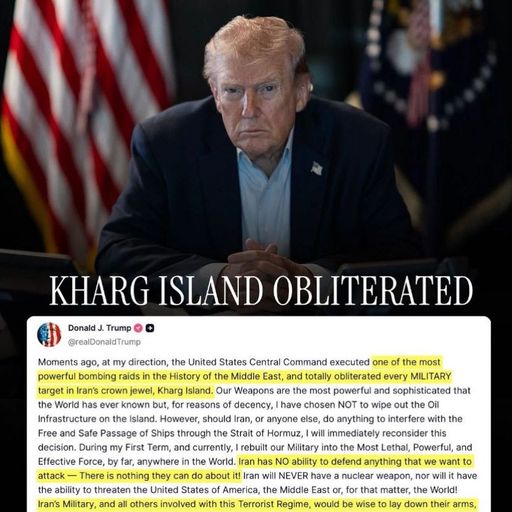



Breaking This Week! US Reportedly Plans to Announce Formation of Hormuz Strait "Escort Coalition" – What Are Various Countries' Positions?
As the war between the United States and Iran enters its third week, U.S. President Trump may announce the formation of an international coalition in the coming days to escort commercial ships passing through the Strait of Hormuz.
According to reports from CCTV News and other media outlets, on the 15th, the U.S. government plans to announce the formation of a so-called “Hormuz Strait Escort Coalition.”
U.S. officials familiar with the matter say that some countries have agreed to provide escort services for ships passing through this critical international oil shipping route.
U.S. officials revealed that the White House could announce the formation of this coalition as early as this week. They stated that whether the escort operations will begin before the U.S. and Israel halt their large-scale military actions against Iran is still under discussion.
The potential statement may be adjusted depending on the battlefield situation. Due to the risks involved, many countries have publicly stated that they will not make clear commitments to such escort missions until hostilities cease.
Earlier this month, President Trump stated that if necessary, U.S. military forces would escort oil tankers crossing the Strait of Hormuz. White House officials have also repeatedly said that the U.S. Navy will support commercial ships attempting to traverse this narrow waterway. However, no related actions have yet been seen.
Last Saturday, Trump said that many countries would send warships to work with the U.S. to ensure the smooth passage through the Strait of Hormuz. However, he did not specify which countries have decided to participate.
“Many countries, especially those affected by Iran’s attempts to close the Strait of Hormuz, will send warships alongside the United States to keep the strait open and secure,” Trump posted on his social platform Truth Social.
He also expressed hope that countries like France, Japan, South Korea, the UK, and others could send vessels to the region.
The Strait of Hormuz is a strategic location for Iran to counter joint military offensives by the U.S. and Israel. About 20% of the world’s daily oil consumption is transported through this strait. Iran’s blockade has caused oil prices to surge significantly. Since the U.S. launched military actions against Iran two weeks ago, international oil prices have surpassed $100 per barrel, and domestic U.S. gasoline prices have increased by over 70 cents per gallon.
According to the American Automobile Association (AAA), on Sunday, the average U.S. gasoline price was $3.70 per gallon, up 26% from $2.93 a month ago. Meanwhile, diesel prices increased by 36%, from $3.66 to $4.97 per gallon.
U.S. Congressional Republicans have publicly and privately urged the White House to take action to mitigate the short-term economic impact on Americans. This is an election year, and if oil prices remain high, it could harm Trump’s Republican Party’s prospects.
What is the attitude of various countries toward escorting?
It is still unclear which countries will join the so-called Hormuz Strait “escort coalition.”
However, in recent days, some countries have made statements regarding escorting through Hormuz. Some have explicitly opposed the escort plan, while others have said they will consider it cautiously.
Following Trump’s call for multiple countries to send warships to escort through the Strait of Hormuz, France, Japan, South Korea, and the UK responded first.
France stated it would not send ships. The French Ministry of Foreign Affairs’ official account posted on social platform X that “no, the French aircraft carrier and its task force will remain in the Eastern Mediterranean.”
Japanese officials told local media that Japan would not send ships solely because of Trump’s call and emphasized that “Japan will decide independently, and autonomous judgment is crucial.”
The South Korean presidential office said on the 15th that they would carefully consider Trump’s appeal and maintain “close communication” with the U.S.
A UK Ministry of Defence spokesperson told U.S. media that the UK is “currently discussing a range of options with our allies and partners to ensure the safety of shipping in the region.”
Latest reports indicate that Germany and Australia have also explicitly stated they will not participate in escort operations.
German Foreign Minister Annalena Baerbock said on March 15 that Germany would not participate in international military actions to protect commercial ships in the Strait of Hormuz.
In a program, Baerbock addressed issues such as the Iran nuclear deal and whether the EU should expand its activities in the Strait of Hormuz, stating, “Are we (Germany) going to become active participants in this conflict soon? No.” She emphasized that the German government’s position is very clear, with Chancellor Scholz and Defense Minister Pistorius both stating, “We will not participate in this conflict.”
Australia’s Minister of Transport said on the 16th that Australia will not send naval vessels to the Strait of Hormuz to protect oil-carrying ships from Iranian attacks.
Regarding “escort through Hormuz,” some experts have expressed skepticism, stating that effective escort requires thousands of troops and months of preparation. Even if escort operations begin, due to the narrow waterway and limited number of warships, daily transit volume is expected to be less than 10% of normal levels. Moreover, escorting cannot completely eliminate threats; restoring confidence in shipping and insurance industries is key to returning oil flows to normal.
(Article source: Caixin)