


Futures
Access hundreds of perpetual contracts
TradFi
Gold
One platform for global traditional assets
Options
Hot
Trade European-style vanilla options
Unified Account
Maximize your capital efficiency
Demo Trading
Introduction to Futures Trading
Learn the basics of futures trading
Futures Events
Join events to earn rewards
Demo Trading
Use virtual funds to practice risk-free trading
Launch
CandyDrop
Collect candies to earn airdrops
Launchpool
Quick staking, earn potential new tokens
HODLer Airdrop
Hold GT and get massive airdrops for free
Launchpad
Be early to the next big token project
Alpha Points
Trade on-chain assets and earn airdrops
Futures Points
Earn futures points and claim airdrop rewards


More





"War + Semiconductors" Powerfully Drive Tungsten Price Soaring 557% in One Year
Tungsten, a metal used in weapon manufacturing and semiconductor production, is experiencing an unprecedented surge in prices.
According to Fastmarkets’s APT European benchmark price data, tungsten is currently priced at $2,250 per metric ton, representing a cumulative increase of 557% over the past year, far outperforming mainstream commodities like gold, copper, and oil. Since the beginning of this year, tungsten prices have more than doubled.
Bloomberg reported on Monday that George Heppel, Vice President of Commodity Research at BMO Capital Markets, said that in his 12 years of experience in commodities, “I’ve never seen the tungsten market so tight—except during the lithium boom in 2021.”
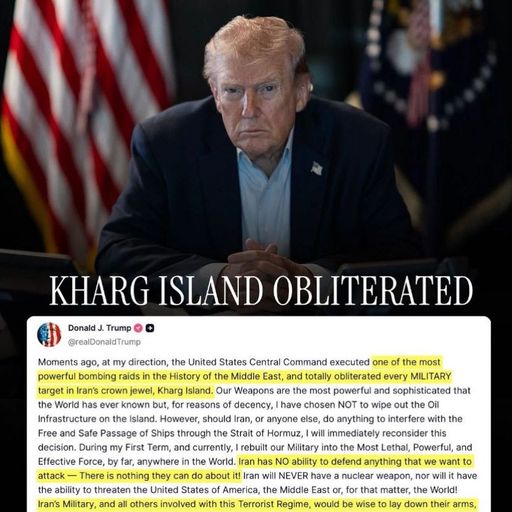
The core drivers behind this rally are twofold: a sharp increase in military demand and ongoing supply tightening. The conflict in the Middle East is accelerating inventory depletion, with buyers competing for alternative sources; meanwhile, Western governments are accelerating efforts to localize critical mineral supply chains, further reinforcing market expectations of tungsten scarcity.
Military Demand Sparks Price Surge
Tungsten is an ultra-high-density metal, widely used in military equipment such as armor-piercing shells, missile components, helicopter and fighter jet counterweights. Project Blue researcher Janine Le Roux stated that military-related tungsten consumption is expected to grow by 12% this year, covering helicopters, fighter jets, and ammunition.
“The Iran conflict clearly reminds us how intense the consumption of metals can be in 21st-century warfare,” Heppel said. “Thousands of drones and intercept missiles—tungsten plays a crucial role in all of this.”
Le Roux pointed out that ongoing conflicts in the Middle East are a significant factor driving recent price increases. As user inventories run out, supply-demand imbalances become more pronounced, and upward price pressure continues to build.
Supply Gap Difficult to Fill Quickly
Tungsten is a highly concentrated niche market. Project Blue estimates that the global tungsten market size is about $16 billion this year, roughly 5% of the copper market. China is the world’s largest exporter of tungsten ore; according to the U.S. Geological Survey, global tungsten production last year was approximately 85,000 metric tons, with China accounting for 79%.
Lewis Black, CEO of Almonty Industries, said his company started production at a tungsten mine in South Korea last December and is seeking to develop the first U.S. tungsten mine in a decade. He revealed that U.S. authorities contacted Almonty last month regarding immediate supply issues, with nearly half of the Korean output destined for ammunition manufacturing in Pennsylvania.
However, the supply gap cannot be bridged in the short term. David Argyle, co-founder of Arlington Innovation Partners, a key materials investment firm in Washington, stated that expanding mine capacity in Spain, Brazil, Australia, and the U.S. will take at least about two years—assuming investors believe high prices will persist. He believes the current supply tightness is a temporary phase, “with a maximum window of 24 months that will test the market.”
Price Discovery Mechanism Reshaped
This surge in tungsten prices also reflects a deeper structural change in the market: the price mechanism is being reshaped. Black pointed out that historically, market prices have long deviated from true supply and demand levels. “We have never been in a situation where prices are determined solely by the market,” he said. “So, we really don’t know where prices will eventually stabilize.”
Since tungsten is not traded on major exchanges, market transparency is low and liquidity is poor, further amplifying the risk of price volatility. Argyle warned that, given the market’s scarcity and low liquidity, prices could rise even further.
Some large users have begun hedging supply risks through recycling. Ceratizit, a hard alloy tool manufacturer under Austria’s Plansee Group, said it mitigates supply pressure by collecting and recycling scrap; similarly, Sandvik, a Swedish engineering group, is involved in tungsten mining and recycling. However, recycling scrap can only partially offset one-time supply shortfalls. The fundamental resolution of structural tightness still depends on substantial global mine capacity expansion.
Risk Warning and Disclaimer
Market risks exist; investments should be made cautiously. This article does not constitute personal investment advice and does not consider individual users’ specific investment goals, financial situations, or needs. Users should determine whether any opinions, views, or conclusions herein are suitable for their particular circumstances. Investment carries risks, and responsibility rests with the individual investor.