


Futures
Access hundreds of perpetual contracts
TradFi
Gold
One platform for global traditional assets
Options
Hot
Trade European-style vanilla options
Unified Account
Maximize your capital efficiency
Demo Trading
Introduction to Futures Trading
Learn the basics of futures trading
Futures Events
Join events to earn rewards
Demo Trading
Use virtual funds to practice risk-free trading
Launch
CandyDrop
Collect candies to earn airdrops
Launchpool
Quick staking, earn potential new tokens
HODLer Airdrop
Hold GT and get massive airdrops for free
Launchpad
Be early to the next big token project
Alpha Points
Trade on-chain assets and earn airdrops
Futures Points
Earn futures points and claim airdrop rewards


More





The most aggressive retail investors are massively buying Chinese HALO assets.
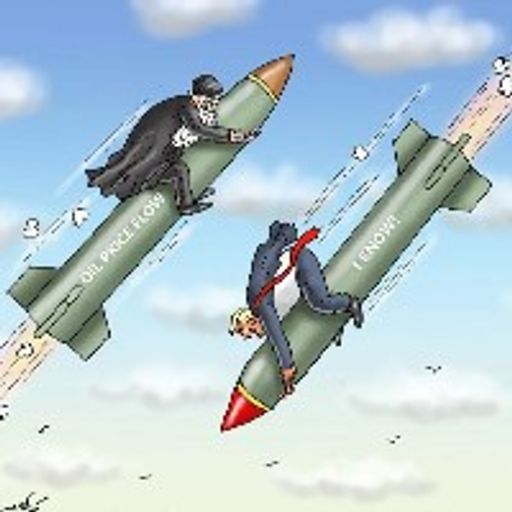
Iran warns the U.S. to prepare for $200 oil prices, as global risk assets tremble!
Today, Asia-Pacific stock markets are all in the red again, with the Japanese stock index down 1%, Hong Kong stocks down 0.7%, and South Korea’s KOSPI down 0.48%.
This small decline is nothing compared to the world’s most aggressive retail investors!
According to data from the Korea Exchange, local institutional investors and foreign investors continued to take profits today, net selling components of the KOSPI, leaving individual investors as the only ones buying, with a net purchase of 2,057 billion won, showing a somewhat reckless stance.
As the world’s most notorious retail investors, they employ extremely aggressive investment styles and high leverage, actively seeking high volatility and high returns globally. Wherever market hotspots emerge, they swarm:
They have previously bottomed out Russian ETFs, Tesla’s seventh-largest shareholder, and after China’s stock market fully reversed in September 2024, by 2025 China became Korea retail investors’ second-largest overseas investment destination…
Latest data shows that Korean retail investors are now targeting: China’s HALO assets!
According to SEIbro, a subsidiary of the Korea Securities Depository (KSD), as of March 11, Korean investors have bought into four A-share ETFs in the past month: Innovation Drug ETF (159992), Sci-Tech Innovation Chip ETF (588200), Chip ETF (159995), and Artificial Intelligence ETF (159819);
The top net-buying A-shares in the past month include: Sany Heavy Industry, China Power Construction, Guangxun Technology, XJ Electric, China Western Electric, Zhejiang Energy Electric Power, Chang电 Technology, Guodian Nari, and TBEA.
(This content is a factual listing of data and does not constitute any investment advice.)
In the past month, Korean investors’ top 20 Hong Kong stock purchases include three ETFs: GlobalX China Electric Vehicle & Battery ETF, Southern East Asia Samsung Electronics 2x Leveraged Product, and Southern East Asia Hang Seng Tech Index ETF;
The top net-buying Hong Kong stocks in the past month are: China Energy Construction, MiniMax, Harbin Electric, Lankei Technology, Goldwind, China Power, CGN Power, and Baidu.
Since the beginning of the year, the leading A-shares bought by Korean investors are:
Sany Heavy Industry, AI ETF (EasyFund), China Power Construction, Shen Nan Circuit, CATL, Juhua股份, Northern Rare Earth, Industrial Fuxian, Haixing Electric, and Xujie Electric.
The AI ETF (EasyFund) (159819), which tracks the CSI Artificial Intelligence Theme Index, has attracted significant attention from Korean retail investors this year. It is “hardware and software combined,” with the top three sectors being chips, communication equipment, and AI applications. Its core holdings include Xin Yisheng, Zhongji Xuchuang, Cambrian, Lankei Technology, and Sugon, key players in the AI industry chain. Its latest scale reaches 24.861 billion yuan, making it the largest among similar products, with a comprehensive fee rate of 0.2%, the lowest in the market.
Since the beginning of the year, the top Hong Kong stocks net bought by Korean investors are:
MiniMax, GlobalX China Electric Vehicle & Battery ETF, Lankei Technology, Huaxia CSI 300 ETF, Southern East Asia Samsung Electronics 2x Leveraged Product, iShares MSCI Hong Kong Tech ETF, China Energy Construction, InnoSage, WuXi AppTec, and Harbin Electric.
Compared to the top pure tech giants like Xiaomi Group, UBTECH, Alibaba, Lao Puo Gold, and SMIC, which saw the most net purchases in 2025, Korean retail investors’ latest trades surprisingly show a strong HALO presence!
For example, among the top 20 net-buying A-shares in the past month, over 80% are in power equipment/grid, construction machinery, semiconductors, utilities, and chemicals—assets defined as HALO by Goldman Sachs and Morgan Stanley.
Assets like Sany Heavy Industry, China Power Construction, Guodian Nari: high fixed asset ratio, long construction cycles;
Chang电 Technology, Shengyi Technology, Tongwei: heavy assets in semiconductors/new energy, slow technological iteration, rigid demand;
Innovation drugs, chip ETFs: underlying assets are heavy-capacity assets rather than light assets like software or internet.
Korean retail investors’ recent Hong Kong stock trades over the past month also show a HALO-centric allocation structure—tech heavy assets plus infrastructure and utilities, such as China Energy Construction, China Power, and Lankei Technology—highly aligned with A-share buying logic.
No wonder they are known as the world’s most aggressive retail investors, once again standing at the forefront of global market hotspots.
The reputation of being the “world’s most aggressive retail investors” is no accident but a product of Korea’s unique social structure:
In a society where chaebols and social hierarchies are rigid, conventional upward mobility channels are nearly closed, and financial markets become one of the few arenas where they see a chance to turn things around.
As the old man in “Squid Game” said: “In the outside world, you don’t stand a chance to play this game.”
This perfectly reflects the mindset of many Korean retail investors—where social rigidity exists, the financial market is one of the few battlegrounds where they feel they might reverse their fortunes.
Like beasts lurking in the shadows, empowered by highly developed information networks, Korean retail investors can instantly detect market anomalies worldwide, quickly form consensus, and place heavy bets, all in pursuit of a once-in-a-lifetime chance to defy the odds.