


Futures
Access hundreds of perpetual contracts
TradFi
Gold
One platform for global traditional assets
Options
Hot
Trade European-style vanilla options
Unified Account
Maximize your capital efficiency
Demo Trading
Futures Kickoff
Get prepared for your futures trading
Futures Events
Join events to earn rewards
Demo Trading
Use virtual funds to experience risk-free trading
Launch
CandyDrop
Collect candies to earn airdrops
Launchpool
Quick staking, earn potential new tokens
HODLer Airdrop
Hold GT and get massive airdrops for free
Launchpad
Be early to the next big token project
Alpha Points
Trade on-chain assets and earn airdrops
Futures Points
Earn futures points and claim airdrop rewards




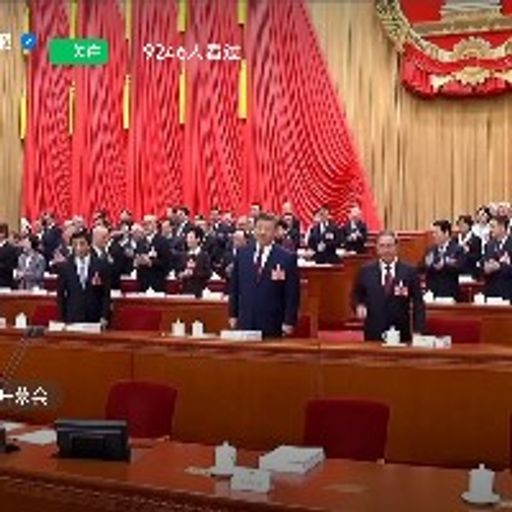


National Committee Member of the Chinese People's Political Consultative Conference, Lian Yuming: Let the computing power "run" and weave a nationwide network
People’s Daily Reporter Zhou Wen
As we approach the “14th Five-Year Plan,” how to better build a nationwide integrated computing power network has become a key focus of attention. Member of the National Committee of the Chinese People’s Political Consultative Conference and Founding Director of the Beijing International Urban Development Institute, Lian Yuming, offers suggestions on this topic, proposing adjustments to optimize the “East Data, West Computing” strategic layout and the construction of a classified and graded national computing power system to lay a solid foundation for high-quality digital economic development.
What exactly is “computing power”? It is invisible and intangible, yet it constantly influences our lives and is a critical productivity in the digital economy era. Since the comprehensive launch of the “East Data, West Computing” project in 2022, the country has planned and built eight major hubs and ten clusters, initially forming the backbone of the national computing network. The “14th Five-Year Plan” recommends moderately advancing the construction of new infrastructure, promoting the development and efficient utilization of information communication networks, the integrated national computing power network, and major scientific and technological infrastructure, as well as updating traditional infrastructure and transforming it into digital intelligence.
Lian Yuming stated that, against the backdrop of the rapid emergence of new productive forces driven by artificial intelligence, China’s computing power development has achieved remarkable results but also revealed deep structural contradictions in layout, coordination, and green electricity.
He specifically pointed out four main challenges: a mismatch between supply and demand in computing power structure, with excess low-end computing resources and insufficient high-end intelligent computing power; low utilization of general computing power in the western regions, while eastern industries urgently need more intelligent computing resources; serious “computing power islands” phenomena, with inconsistent technical standards and underdeveloped market mechanisms, making cross-regional and cross-entity resource flow and flexible scheduling difficult; network latency and cost constraints, with incomplete high-speed direct connection networks across regions, high transmission costs, weakening the western regions’ geographic advantages and hindering real-time business development; and the low level of “computing and electricity” coordination, with insufficient green transformation of data centers and integration with new power systems, preventing the full utilization of clean energy advantages.
In response to these issues, Lian Yuming recommends accelerating the optimization of the national computing power strategic layout, building a nationwide, classified, and scenario-driven computing power system, and implementing specific measures in four areas: constructing a three-tier computing power architecture of “national—regional—edge,” with precise functional layout; establishing classified guidance and unified scheduling mechanisms to promote efficient allocation of computing resources; strengthening key technological breakthroughs and network cost reductions to solidify integrated operation foundations; deepening innovation in “computing and electricity” coordination and applying market tools to promote the green and inclusive development of computing power.