

Trade
Basic
Futures
Futures
Hundreds of contracts settled in USDT or BTC
TradFi
Gold
Trade global traditional assets with USDT in one place
Options
Hot
Trade European-style vanilla options
Unified Account
Maximize your capital efficiency
Demo Trading
Futures Kickoff
Get prepared for your futures trading
Futures Events
Participate in events to win generous rewards
Demo Trading
Use virtual funds to experience risk-free trading
Earn
Launch
CandyDrop
Collect candies to earn airdrops
Launchpool
Quick staking, earn potential new tokens
HODLer Airdrop
Hold GT and get massive airdrops for free
Launchpad
Be early to the next big token project
Alpha Points
Trade on-chain assets and enjoy airdrop rewards!
Futures Points
Earn futures points and claim airdrop rewards
Investment
Simple Earn
Earn interests with idle tokens
Auto-Invest
Auto-invest on a regular basis
Dual Investment
Buy low and sell high to take profits from price fluctuations
Soft Staking
Earn rewards with flexible staking
Crypto Loan
0 Fees
Pledge one crypto to borrow another
Lending Center
One-stop lending hub
VIP Wealth Hub
Customized wealth management empowers your assets growth
Private Wealth Management
Customized asset management to grow your digital assets
Quant Fund
Top asset management team helps you profit without hassle
Staking
Stake cryptos to earn in PoS products
Smart Leverage
New
No forced liquidation before maturity, worry-free leveraged gains
GUSD Minting
Use USDT/USDC to mint GUSD for treasury-level yields

More






How Big Tech Displaced Bitcoin from the Top Ten Asset Rankings
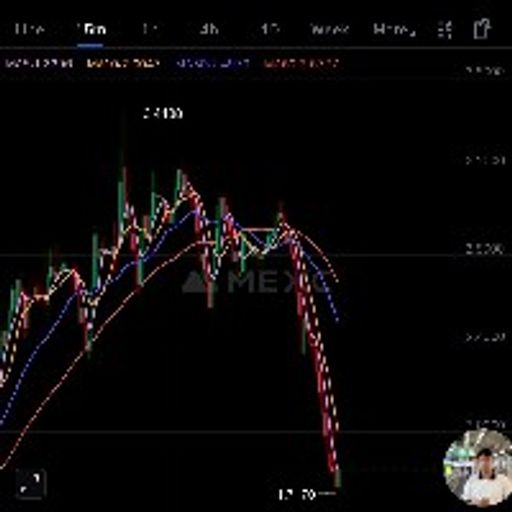
The crypto market experienced a significant correction today, with Bitcoin tumbling to 11th place on the global asset leaderboard—a dramatic reversal that underscores the broader power shift toward big tech companies. Bitcoin’s price fell to $71.43K, reducing its market capitalization to $1.427 trillion, marking one of the worst drawdowns since October. The broader fallout was severe, with liquidations totaling $1.8 billion across crypto derivatives within a 24-hour window.
However, Bitcoin’s struggle extends beyond typical market volatility. The real story lies in how big tech has captured investor imagination and capital flows at crypto’s expense. Companies like Nvidia, Google, Microsoft, and Saudi Aramco have grown so dominant that they’ve collectively displaced traditional safe havens—and Bitcoin along with them. Even semiconductor manufacturer TSMC now commands a larger market valuation than the leading cryptocurrency. This represents a fundamental shift in how institutions allocate capital.
The Unstoppable Rise of Big Tech and AI Dominance
The primary catalyst behind Bitcoin’s descent involves a massive reallocation of investment focus toward big tech firms betting heavily on artificial intelligence. Investors have been channeling billions into technology giants, driven by the belief that AI productivity gains will generate substantial long-term returns. Nvidia and Google have emerged as the clear winners in this competition for capital, commanding top-tier valuations and sustained investor enthusiasm.
Notably, traditional safe-haven assets like gold and silver have also experienced price declines, though they maintain higher rankings on the global asset list. This suggests the sell-off isn’t merely a crypto-specific phenomenon but reflects a broader rotation toward technology and away from defensive positions. The reasoning behind this shift is straightforward: in an environment of technological acceleration and potential interest rate relief, growth-oriented assets appear more attractive than traditional hedges.
Policy Uncertainty Amplifies Market Anxiety
A significant portion of today’s volatility stems from Federal Reserve signals and personnel decisions that have left investors uncertain about the future monetary policy direction. The Fed maintained interest rates at 3.5% while declining to commit to near-term rate cuts, creating a hold-your-breath moment for risky assets.
The situation intensified when President Trump announced Kevin Warsh as his nomination for the next Federal Reserve chair. Warsh has historically been known as an inflation “hawk,” advocating for higher interest rates in previous years. Yet recent statements suggest he has moderated his stance, arguing that AI-driven productivity improvements could support deeper rate reductions in the future. This contradictory messaging has left market participants guessing whether Warsh will prioritize price stability or respond to political pressure from the White House.
When uncertainty clouds the outlook for US dollar policy, investors reflexively reduce exposure to speculative and risky assets like Bitcoin. This psychological shift, combined with a looming government shutdown scenario, created a perfect convergence of bearish factors that overwhelmed any supportive technical signals.
Contagion Effects Accelerate Across Digital Assets
The damage has spread far beyond Bitcoin. Ethereum, the second-largest cryptocurrency, declined sharply to trade near $2.12K, extending losses across the broader digital asset ecosystem. Nearly every major coin registered double-digit percentage declines this week, with recovery signals conspicuously absent from on-chain metrics.
The selling pressure intensified when Bitcoin Exchange-Traded Funds recorded outflows exceeding $1.1 billion, signaling that institutional investors are actively reducing their positions. This coordinated retrenchment highlights the growing divergence between traditional big tech equities—which continue attracting fresh capital despite concerns about AI spending efficiency—and digital assets, which face structural headwinds from policy uncertainty and capital rotation.
For crypto holders, the timing is particularly brutal, as the widening gap between big tech valuations and digital asset performance suggests the rotation story remains intact. Until Fed uncertainty resolves or macro conditions stabilize, the pressure on Bitcoin and the broader crypto market is likely to persist.