
Futures
Access hundreds of perpetual contracts
TradFi
Gold
One platform for global traditional assets
Options
Hot
Trade European-style vanilla options
Unified Account
Maximize your capital efficiency
Demo Trading
Introduction to Futures Trading
Learn the basics of futures trading
Futures Events
Join events to earn rewards
Demo Trading
Use virtual funds to practice risk-free trading
Launch
CandyDrop
Collect candies to earn airdrops
Launchpool
Quick staking, earn potential new tokens
HODLer Airdrop
Hold GT and get massive airdrops for free
Pre-IPOs
Unlock full access to global stock IPOs
Alpha Points
Trade on-chain assets and earn airdrops
Futures Points
Earn futures points and claim airdrop rewards


Shareholding auction forces the provincial cooperative to take equity and take over; can Hai'an Rural Commercial Bank support local financial services?
This image may have been generated by AI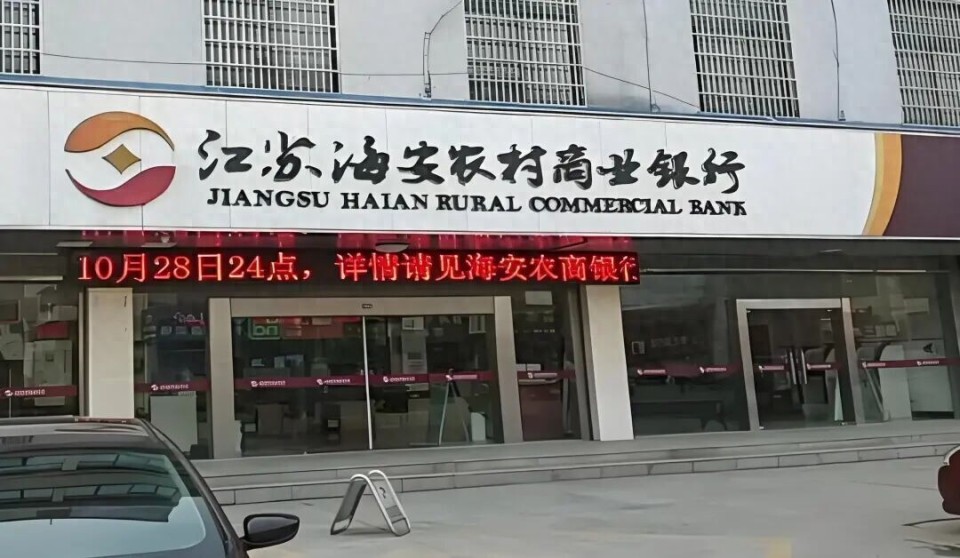
Text / Bao Xiren
Source / Business News Magazine
As a typical representative of Jiangsu county-level rural commercial banks, Hainan Rural Commercial Bank once harbored dreams of going public, attempting to leverage the capital market to expand its development path, but it has faced multiple negative shocks such as IPO termination, shareholder risk outbreaks, and regulatory penalties.
More challenging than external turmoil is the internal legacy of its shareholding structure, as well as operational difficulties such as sluggish performance growth and emerging asset quality concerns.
From the massive natural person shareholders left over from the early rural credit cooperative reforms, to the controversial “child shareholders,” to the core major shareholders’ shares being repeatedly frozen and auctioned, and then to slowing profit growth and declining risk resistance, Hainan Rural Commercial Bank is caught in a triple dilemma of unstable equity, compliance breaches, and performance pressure, with its long-standing stable operation foundation continuously wavering.
Core shareholder crises frequently occur, forcing provincial union to step in and take over
The shareholding issues at Hainan Rural Commercial Bank are no longer simply about dispersed chaos but have evolved into core shareholders repeatedly experiencing failures, with share stability completely out of control, becoming one of the burdens hindering the bank’s development.
Recently, the second-largest shareholder, Suzhong Construction, and the third-largest shareholder, Jiangsu Sunshine, both had their holdings judicially frozen and auctioned, with share stability under continuous pressure.
Since the beginning of this year, Jiangsu Rural Commercial Bank Union (formerly Jiangsu Rural Credit Cooperative Union) has spent 156 million yuan via judicial auction to acquire a 3.9% stake in Hainan Rural Commercial Bank, becoming the fifth-largest shareholder. This is a “top-down” layout by provincial-level rural commercial banks.
This move aims to stabilize the shareholding structure and strengthen provincial coordination. Market expectations for its future integration into Jiangsu Rural Commercial Bank Union have significantly increased, but the short-term probability of direct merger remains low, likely progressing through shareholding infiltration and governance collaboration to promote integration.
As the local bank with the most branches in Hainan, Hainan Rural Commercial Bank has become the absolute main force in local financial services.
By the end of 2025, its various loans totaled 3B yuan, with over 90% related to agriculture and micro, small, and medium-sized enterprises. Rural financial service coverage reaches 100%, playing an irreplaceable role in county economy and inclusive finance.
However, behind rapid credit expansion, risk hazards are emerging. The bank’s non-performing loan ratio has continued to rise, reaching 1.14% in the first half of 2025, with provisioning coverage significantly declining, weakening its risk resistance.
In addition, the transmission of shareholder debt risks, judicial litigation entanglements, coupled with industry interest rate spreads narrowing and intensified competition, have put dual pressure on credit quality and profit growth, constraining its sustainable service to the local area.
Overall, the investment by Jiangsu Rural Commercial Bank Union injects stability into Hainan Rural Commercial Bank, but resolving shareholding integration and credit risk still requires time. Its position as a pillar of local finance is unlikely to be shaken in the short term. Only by optimizing shareholding structures and strictly controlling credit risks can it maintain steady progress amid provincial coordination and market competition.
It should be noted that the bank’s massive dispersed shareholders not only lead to low efficiency in governance decision-making but also deter external investors, continuously narrowing capital replenishment channels. After withdrawing its IPO application, there is no feasible path to relaunch the listing.
Frequent compliance and risk control failures, regulatory accountability for illegal operations
In fact, the chaos in shareholding structure has propagated to operational levels. Hainan Rural Commercial Bank’s compliance and risk control systems are riddled with loopholes, and in recent years, it has directly received regulatory penalties for illegal operations, exposing failures in core areas such as cross-regional operations and credit approval.
In June 2025, Yangzhou Financial Supervision Bureau issued a penalty, fining Hainan Rural Commercial Bank Jiangdu Branch 300k yuan for illegal issuance of off-site loans. Branch manager Lu Jinchun was warned and fined 50k yuan, marking the most direct compliance penalty against the bank in nearly a year.
Although the penalty amount for illegal off-site loans appears small, it reflects the bank’s aggressive expansion and risk control lapses.
As a county-level rural commercial bank, Hainan Rural Commercial Bank should focus on local service, micro and small enterprises, and agriculture, but it violated regional operation restrictions by issuing loans outside its permitted area, contravening regulatory guidance for local banking operations and significantly increasing credit asset risks.
Compared to local clients, off-site clients are much harder to assess and manage post-loan, and economic fluctuations can easily lead to bad debts, further eroding bank profits.
Besides this violation, the bank is also deeply embroiled in numerous financial loan contract disputes. As of March 2026, the number of related judicial cases exceeded 4,100, mostly for credit default recoveries, indirectly confirming issues of lax credit approval and weak post-loan management.
Failure in compliance and risk control not only results in direct penalties but also damages the bank’s reputation, putting it at a disadvantage in regional financial market competition. It also draws increased regulatory attention, leading to strict restrictions on subsequent business activities and further squeezing profitability.
Performance growth lacks momentum, asset quality and profits face dual pressures
The negative impacts of unstable shareholding and compliance failures are ultimately reflected in operational performance. Beneath seemingly stable financial reports, there are multiple hidden concerns such as slowing profit growth, declining asset quality, and weakened risk resistance, with growth momentum already exhausted.
Core data shows that in 2024, the bank achieved a total operating income of 8B yuan, a year-on-year increase of only 6.38%; net profit attributable to the parent was 902 million yuan, up just 4.76%, far below industry average, with nearly stagnant profit growth.
In the first half of 2025, the bank’s operating income was 69.59B yuan, and net profit was 543 million yuan, with slight year-on-year increases but clearly insufficient growth drivers. It mainly relies on traditional interest margin business, with contribution from intermediary business extremely low, even at a loss that cannot cover costs.
Asset quality risks are more prominent. At the end of 2024, the non-performing loan ratio rose to 1.05%, up 0.06 percentage points year-on-year. Although still low in absolute terms, it has been rising slightly for several consecutive years, indicating an inflection point in bad loans.
In the first half of 2025, the non-performing loan ratio further increased to 1.14%, up 0.09 percentage points from the start of the year, showing a clear downward trend in asset quality.
More concerning is the bank’s weakening risk resistance. In the first half of 2025, the provisioning coverage ratio dropped to 321.97%, a sharp decline of 61.63 percentage points from the beginning of the year. The buffer for risk mitigation is thinning, and if non-performing loans continue to rise, profits will face significant erosion.
From the operational structure, Hainan Rural Commercial Bank overly depends on traditional credit business, with profit margins squeezed by narrowing interest spreads. Meanwhile, development of intermediary businesses is lagging, lacking new profit growth points.
Compared to other Jiangsu rural commercial banks, Hainan Rural Commercial Bank lags in asset scale expansion, profitability efficiency, and risk management. Relying heavily on county markets, it faces increasing competition from state-owned large banks and joint-stock banks, which are actively poaching high-quality clients, intensifying survival pressures for the already sluggish bank.
From chaotic shareholding to compliance failures and performance pressures, the bank’s predicament is not formed overnight but results from a combination of legacy issues from rural credit cooperatives, aggressive business strategies, shareholder risk transmission, and intensified industry competition.
Unless it quickly optimizes its shareholding structure, addresses compliance and risk control shortcomings, and transforms its operational model, Hainan Rural Commercial Bank’s difficulties will deepen, its regional market competitiveness will continue to weaken, and it may ultimately fall into stagnation.