How Vlad’s Two Responses Drove MEME’s Two Rallies
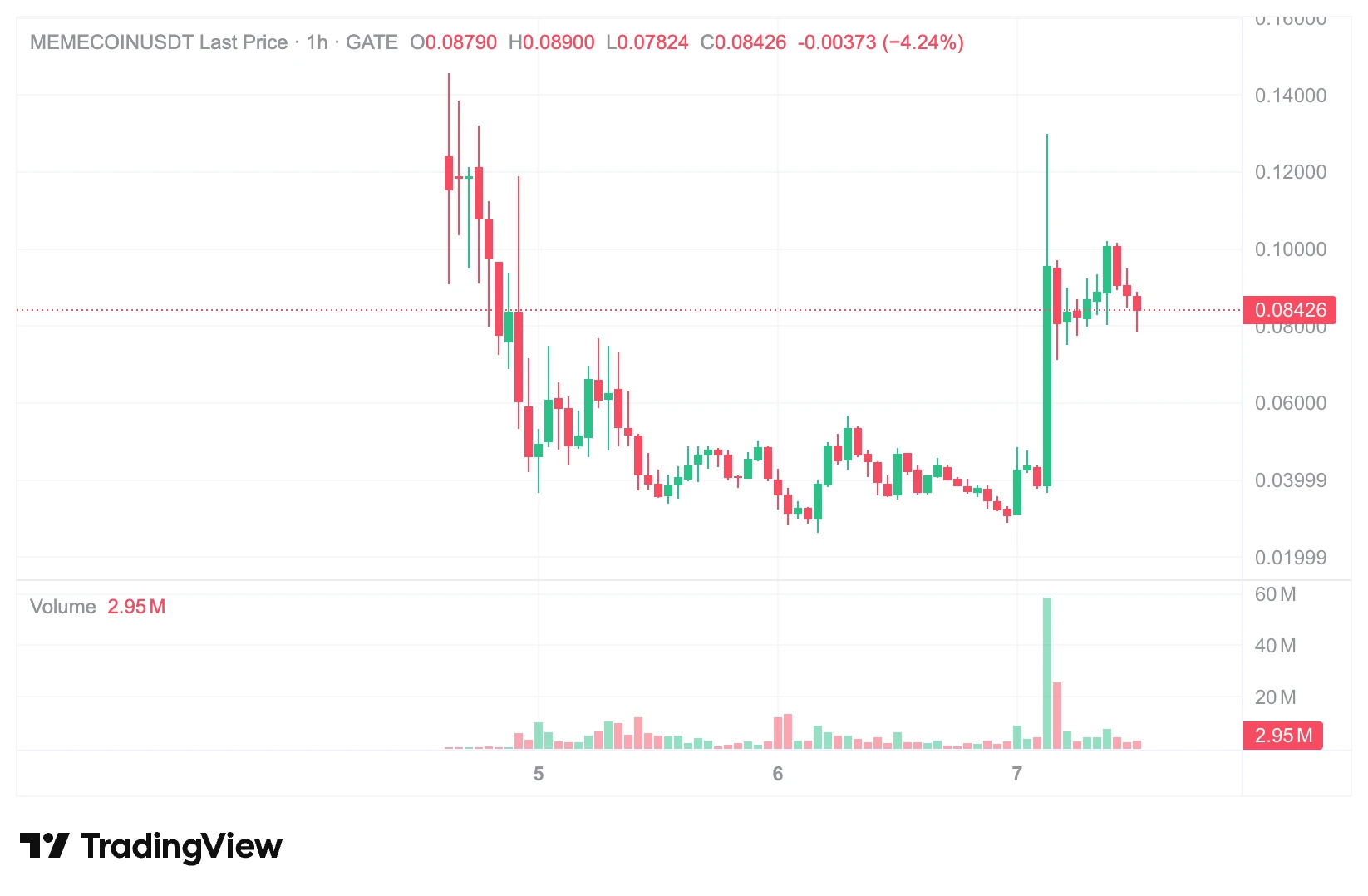
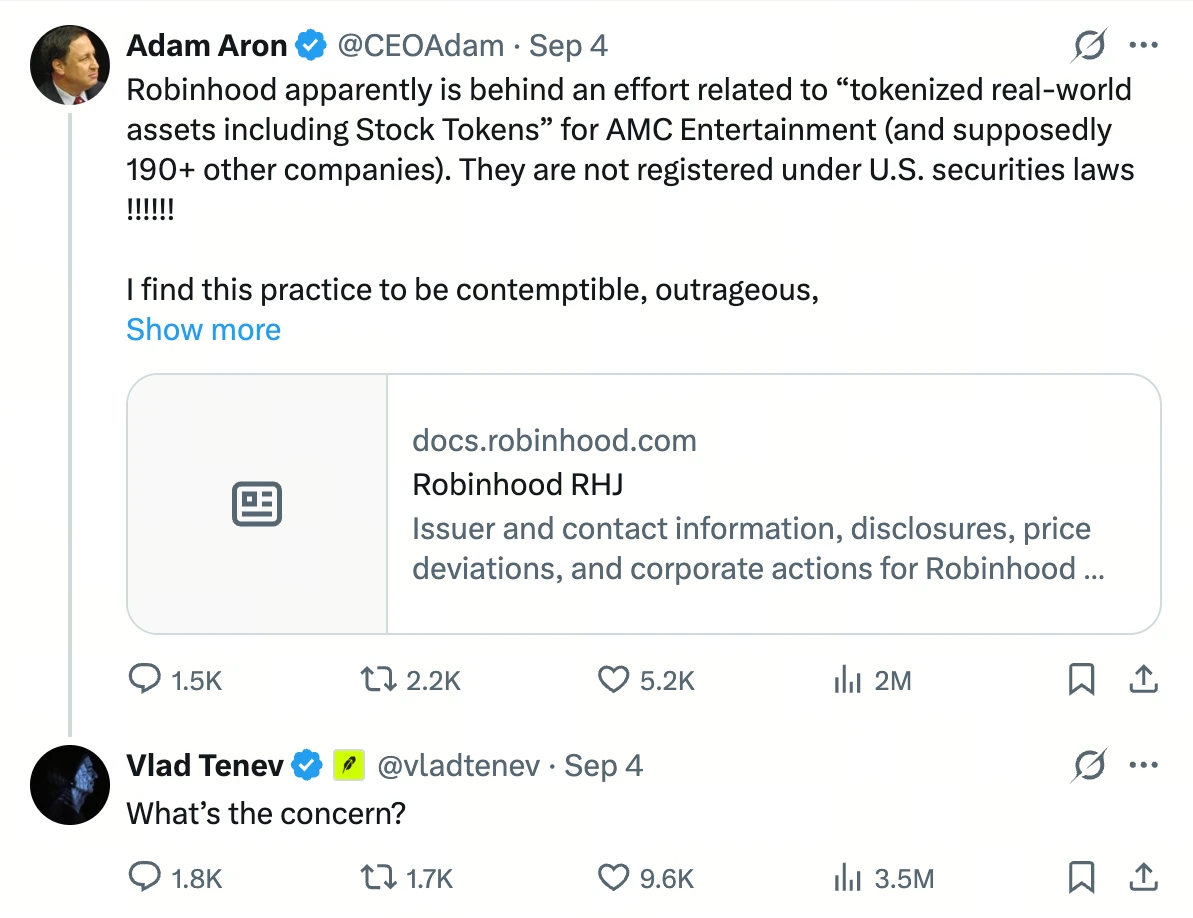
On September 4, Adam Aron used strong language on X, repeatedly describing Robinhood as “despicable,” “outrageous,” and “unforgivable,” and announced that he had hired securities lawyers to investigate. Vlad Tenev responded only, “What’s the concern?” In an attention-driven crypto market, this response quickly translated into trading momentum, sending MEME’s market cap close to $150 million within hours.
MEME then quickly retreated, with its market cap temporarily falling to around $40 million. In the early hours of September 7, Vlad Tenev followed MEME’s official X account. This move once again drew the community’s attention, briefly sending MEME’s market cap nearly 2x higher, to a peak of $174 million. As of publication, its market cap had fallen back to approximately $87 million.
The drivers behind the two rallies were highly consistent: Vlad’s public actions—whether a verbal response or following the account—were interpreted by the market as a form of “endorsement” of the MEME project, triggering FOMO buying. But as the event’s momentum faded, the price retreated as well.
How MEME Inherited AMC’s “Rebellion Totem” Narrative
AMC holds a special place in retail investor culture. In 2021, AMC was on the brink of bankruptcy and was heavily shorted by Wall Street hedge funds. Retail investors on Reddit’s WallStreetBets forum spontaneously rallied, short-squeezing institutions and driving the stock price up dozens of times over. From that moment on, AMC became a symbol of ordinary people resisting the financial establishment.
MEME packaged this historical narrative together with the executive confrontation on September 4 as a “controversial asset.” Every argument in the public discourse was directly converted into new buying pressure in the liquidity pool.
The “Token-Stock Pairing” Mechanism: Liquidity Source and Price Anchor
MEME’s largest liquidity pool is paired with tokenized AMC shares on Robinhood Chain rather than with a stablecoin. This “token-stock pairing” structure means that MEME’s price is influenced not only by sentiment in the crypto market but also linked to the trading rhythm of AMC’s underlying stock.
This mechanism targets both the high volatility of meme coins and the attention surrounding real stocks. Part of the trading fees flows back to the community treasury, which accumulates the corresponding U.S. stock tokens, forming a dual driver of “sentiment speculation + real-asset anchoring.” But it also brings significant risks: when AMC’s share price fluctuates or the liquidity of the tokenized stock changes, MEME faces pressure from both sides.
Narrative Sustainability: How Long Can the Controversy Dividend Last?
The core driver of MEME’s rise is the “controversy dividend” generated by Vlad’s two public interactions. Sustainability depends on three variables:
Legal risk is the primary variable. AMC has clearly stated that it will involve securities counsel in the investigation. If regulators or a court issue an unfavorable ruling on Robinhood’s tokenized shares, the legal foundation of the entire narrative will be shaken.
Attention decay is a real pressure. The on-chain attention economy is characterized by high intensity but short cycles. After surging on September 4, MEME quickly fell to a $40 million market cap, and after surging again on September 7, it likewise retreated rapidly—the market has already shown through price action that each narrative-driven rally is difficult to sustain.
Competition from similar projects could divert attention. As the “token-stock pairing” model spreads and more similar projects enter the market, attention and liquidity will be dispersed, presenting greater challenges to the valuation support of any single project.
The Industry-Wide Impact Behind the AMC Incident
This controversy exposed a fundamental structural conflict in the tokenized asset sector: tokenized stocks provide economic exposure to the underlying asset but do not grant voting rights or direct ownership. Robinhood’s documents describe stock tokens as debt securities issued through offshore entities that track the economic performance of the underlying securities.
Legal experts disagree on the matter. The AMC CEO called the move an “almost existential threat” to the company. Robinhood, meanwhile, uses “geographic separation” as a compliance shield, emphasizing that the product is not sold to U.S. residents. Regardless of the final outcome, the incident has pushed the compliance controversy surrounding “tokenized stocks” to the center of public attention.
MEME Risk Assessment: Triple Pressure
Legal and compliance risks are the most prominent. If AMC obtains an injunction through legal action or regulators intervene, the tokenized AMC stock pool on which MEME depends could face the risk of being removed.
Liquidity risk cannot be ignored. MEME’s liquidity pool is deeply tied to tokenized AMC shares, while the supply of tokenized AMC shares represents only a small portion of the company’s publicly held shares. Under extreme market conditions, the pool could face a liquidity drain.
Narrative decay is the most immediate risk. The two “surge-and-retreat” moves have clearly demonstrated that event-driven gains are difficult to sustain, and the market reprices the asset after each surge.
Conclusion
MEME’s explosive rise resulted from the convergence of multiple factors: AMC’s historical narrative as a “rebellion totem” for retail investors, the public confrontation between Vlad and Adam Aron, and the second catalyst of Vlad subsequently following MEME’s official account. As of September 7, 2026, MEME was trading at $0.087, with a market cap of approximately $87 million. Its price trajectory—surging to a $150 million market cap twice and quickly retreating twice—shows that the market is significantly divided in its valuation of this narrative. MEME’s value is essentially the market’s pricing of the experiment of “turning controversy into an asset”—it demonstrates crypto’s ability to transform real-world events into tradable assets while also exposing the fragility of this transformation in terms of compliance and structure.
FAQ
Q1: What drove MEME’s two rallies?
The first rally (September 4) was triggered by Vlad Tenev’s “What’s the concern?” response to the AMC CEO’s accusations, sending its market cap close to $150 million. The second rally (September 7) was triggered by Vlad following MEME’s official X account, with its market cap peaking at $174 million. The logic behind both rallies was the same: Vlad’s public actions were interpreted by the market as a form of “endorsement” of the project.
Q2: How does MEME’s “token-stock pairing” mechanism work?
MEME’s largest liquidity pool is paired with tokenized AMC shares on Robinhood Chain rather than with a stablecoin. This structure links MEME’s price to the trading rhythm of AMC’s underlying stock, creating a dual driver of “sentiment speculation + real-asset anchoring.”
Q3: Can MEME’s growth narrative continue?
The two “surge-and-retreat” moves have already shown that event-driven gains are difficult to sustain. Sustainability depends on three variables: the direction of legal risks, the attention cycle, and competition from similar projects.
Q4: What are the main risks facing MEME?
Legal and compliance risk (AMC could use legal channels to force Robinhood to halt trading), liquidity risk (deeply tied to tokenized AMC shares), and narrative decay risk (the high-intensity but short-cycle nature of the on-chain attention economy).
Q5: What impact does the AMC-Robinhood confrontation have on the industry?
The incident exposed the structural conflict in the tokenized asset sector between “economic exposure and shareholder rights,” pushed the compliance controversy surrounding tokenized stocks to the center of public attention, and sparked discussion about the structural gap between the global distribution of tokenized assets and the securities laws of different countries.