Lido’s Curated Module v2 Could Improve Ethereum Validator Efficiency Through Consolidation
Why Validator Efficiency Matters on Ethereum
Ethereum’s proof-of-stake system relies on validators to secure the network, confirm transactions, and participate in consensus. Since the transition from proof of work to proof of stake, the number of validators has grown rapidly, creating both opportunities and operational challenges.
A larger validator set can improve decentralization, but it also increases the amount of communication and coordination required within Ethereum’s consensus layer. As the network expands, developers and staking providers have been exploring ways to improve efficiency while maintaining security.
Lido, the largest liquid staking protocol on Ethereum, has now proposed a significant step in that direction through its new Curated Module v2 upgrade.
What Is Curated Module v2?
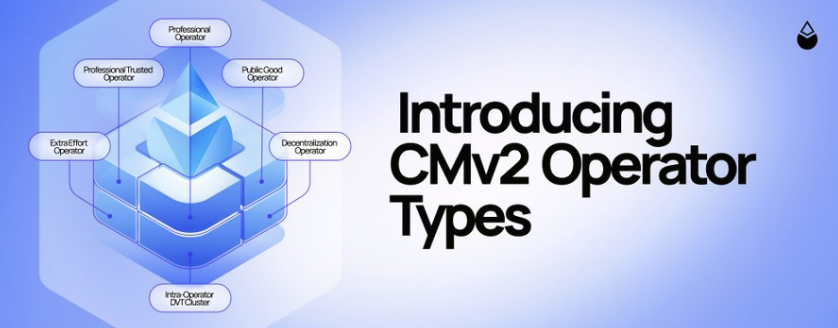
(Source: LidoFinance)
Curated Module v2 is an upgrade to Lido’s staking infrastructure that introduces support for Ethereum’s 0x02 withdrawal credentials.
Under Ethereum’s current staking model, a standard validator typically operates with 32 ETH. The new credential type allows validators to increase their effective balance substantially, potentially holding up to 2,048 ETH under a single validator structure.
This does not mean that individual users need to stake thousands of ETH themselves. Instead, the change enables staking infrastructure providers such as Lido to consolidate multiple smaller validator balances into fewer, larger validator entities. The upgrade is intended to be implemented at the protocol level, meaning users holding stETH do not need to take any action themselves.
How Could This Reduce Ethereum’s Validator Count?
According to Lido’s projections, migrating to the new structure could reduce Ethereum’s validator count from approximately 880,000 validators to around 628,000, representing a decrease of roughly one-third.
The migration process has not yet begun, and these figures are based on Lido’s internal estimates rather than completed network data.
The main benefit of consolidation is that Ethereum’s consensus layer would need to process fewer validator messages and maintain fewer active validator records. This could reduce some of the operational overhead associated with coordinating a very large validator set.
Importantly, the upgrade is focused on the consensus layer and is not intended to change execution-layer activity, which is responsible for transaction processing, gas fees, and smart contract execution.
New Accountability Rules for Node Operators
In addition to validator consolidation, Curated Module v2 introduces new mechanisms designed to strengthen accountability among Lido’s node operators.
The upgrade includes:
Bonding requirements, which require operators to commit collateral.
Penalty mechanisms for certain types of operational failures or misconduct.
Performance-based considerations for future stake allocation.
Lido has indicated that future staking distribution decisions may place greater emphasis on factors such as validator performance, fee competitiveness, and contributions to the broader Ethereum ecosystem.
These changes are intended to create stronger incentives for reliable validator operation and improve the overall quality of Lido’s staking infrastructure.
What Does This Mean for Ethereum Stakers?
For most Ethereum stakers using Lido through stETH, the upgrade is designed to be largely invisible from a user perspective.
Stakers will continue earning Ethereum staking rewards through the existing liquid staking mechanism, while the infrastructure changes occur behind the scenes within Lido’s validator management system.
This highlights an important characteristic of many modern staking protocols: significant improvements to validator architecture can often be implemented without requiring direct action from end users.
Does Validator Consolidation Affect Decentralization?
One of the key questions raised by any validator consolidation proposal is whether reducing the number of validators could weaken decentralization.
Lido argues that the upgrade is intended to improve both efficiency and decentralization by combining larger validator balances with stronger operator accountability rules and more sophisticated stake distribution mechanisms.
Critics may still examine whether concentration of larger validator balances creates new risks, but the proposal attempts to balance operational efficiency with governance and security safeguards. The broader Ethereum community is likely to continue evaluating how large staking providers can optimize infrastructure without increasing centralization concerns.
Conclusion
Lido’s Curated Module v2 represents a significant development in Ethereum’s staking infrastructure. By supporting larger validator balances through 0x02 withdrawal credentials, the upgrade could reduce the number of validators required to maintain the network and improve consensus-layer efficiency.
At the same time, the introduction of bonding requirements, penalty mechanisms, and performance-based operator incentives shows that staking infrastructure is evolving beyond simple reward distribution toward more sophisticated operational governance.
If successfully implemented, Curated Module v2 could become an important example of how Ethereum’s staking ecosystem can scale more efficiently while continuing to prioritize security, reliability, and decentralized network participation.
* The information is not intended to be and does not constitute financial advice or any other recommendation of any sort offered or endorsed by Gate.
* This article may not be reproduced, transmitted or copied without referencing Gate. Contravention is an infringement of Copyright Act and may be subject to legal action.


Related Articles

What Is Technical Analysis?

What Is Fundamental Analysis?

Risks You Must Be Aware Of When Trading Crypto

Influence360 Introduces AI-Powered Infrastructure for Data-Driven Web3 Influencer Campaigns

What Kalshi’s New Employer Disclosure Rule Means for Prediction Markets and Insider Trading